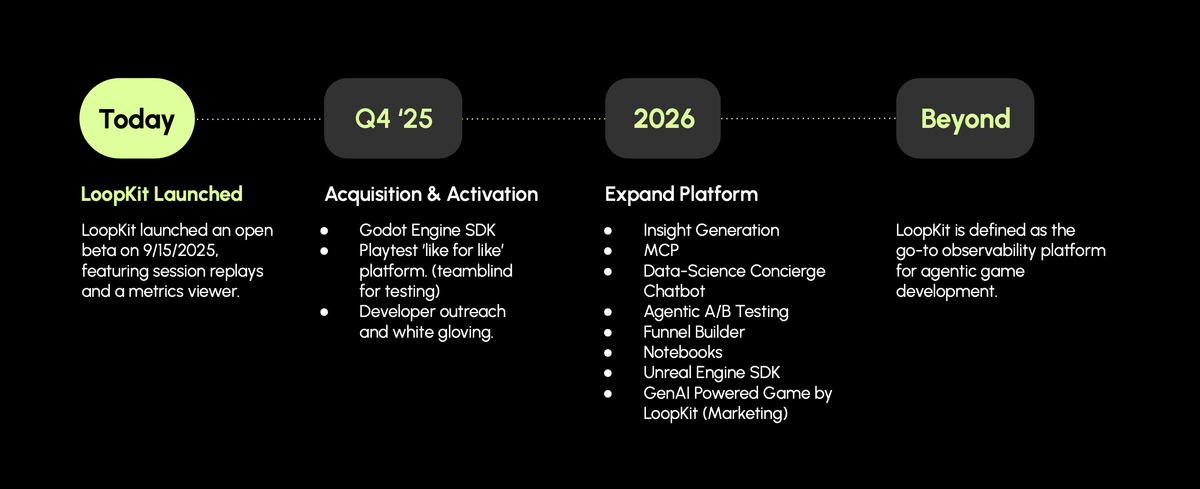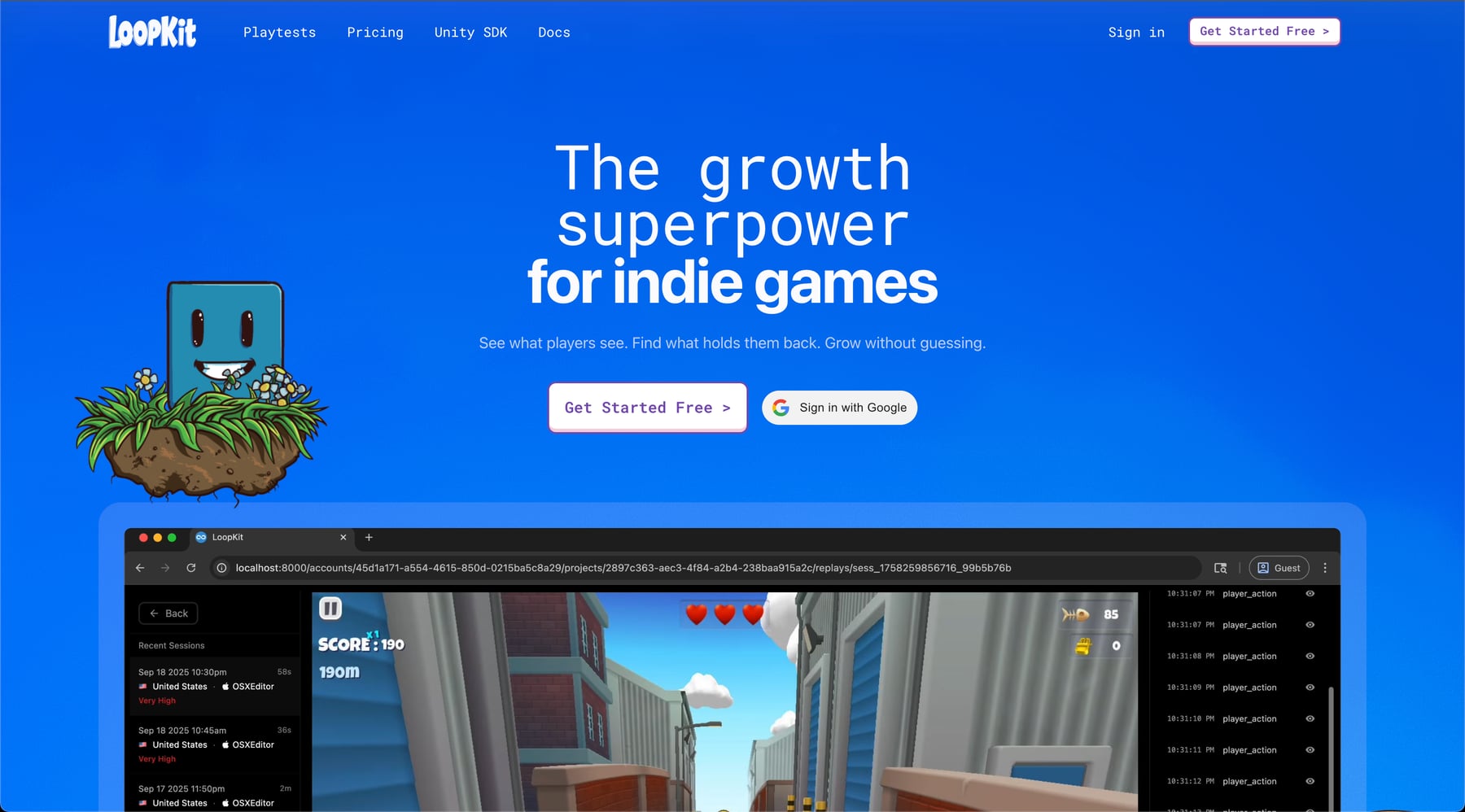
Analytics for indie games (loopkit.ai). A 4 month startup, built by 2.
The pitch
Most indie devs don’t have time to become data analysts. LoopKit watched your game’s event stream and used AI to tell you what changed, what broke, and what to try next, instead of handing you a dashboard you had to figure out yourself.
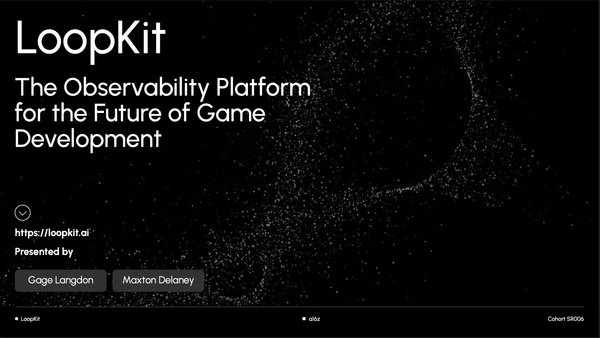 Read the pitch deck
PDF · 10 slides
→
Read the pitch deck
PDF · 10 slides
→
Where the idea came from
It came from my own game. I used analytics to rework its tutorial and got 70% more players past the 15-minute mark. When I talked to other indie devs about it, most had never run an experiment like that. Not because they couldn’t, but because nobody in a small team has the time to set up a data pipeline, build charts, and learn to read them. Big studios have telemetry teams for this. Indie devs have themselves.
LoopKit was meant to close that gap: send events from your game, and instead of a dashboard you have to interpret, agents watch the stream and tell you what changed, what’s broken, and what to try. The bet was that AI tools are letting more people ship games faster, often with less engineering background, and those people need the analyst included. I built it with Maxton Delaney; we’d been building together for a decade by that point.
The name comes from the core mechanic: a “loop” that re-analyzes your event stream on a standing cycle, weekly, generating fresh metrics, retiring whichever ones went stale, and repeating, rather than a dashboard you build once and let rot.
What shipped
LoopKit launched in open beta on September 15, 2025.
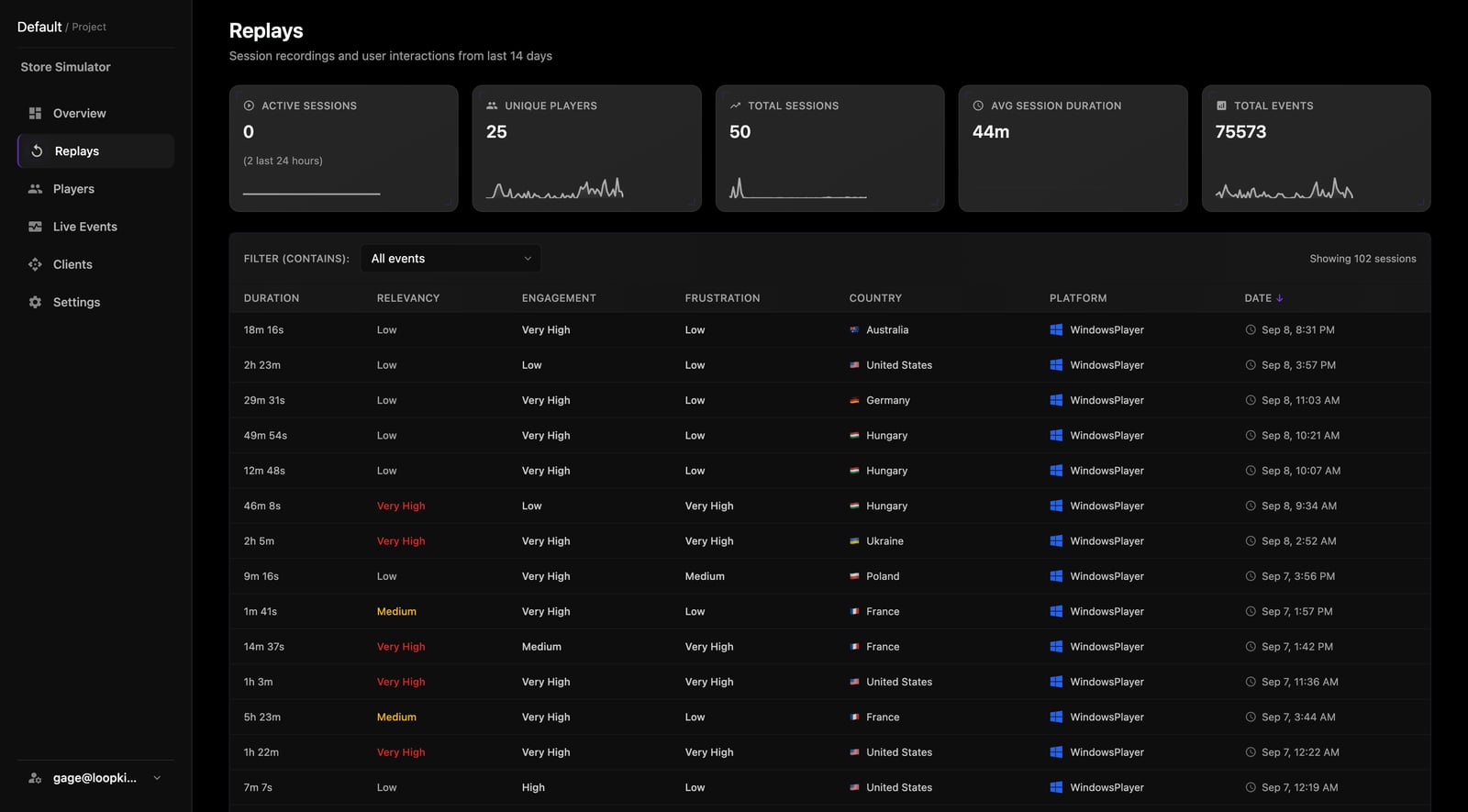
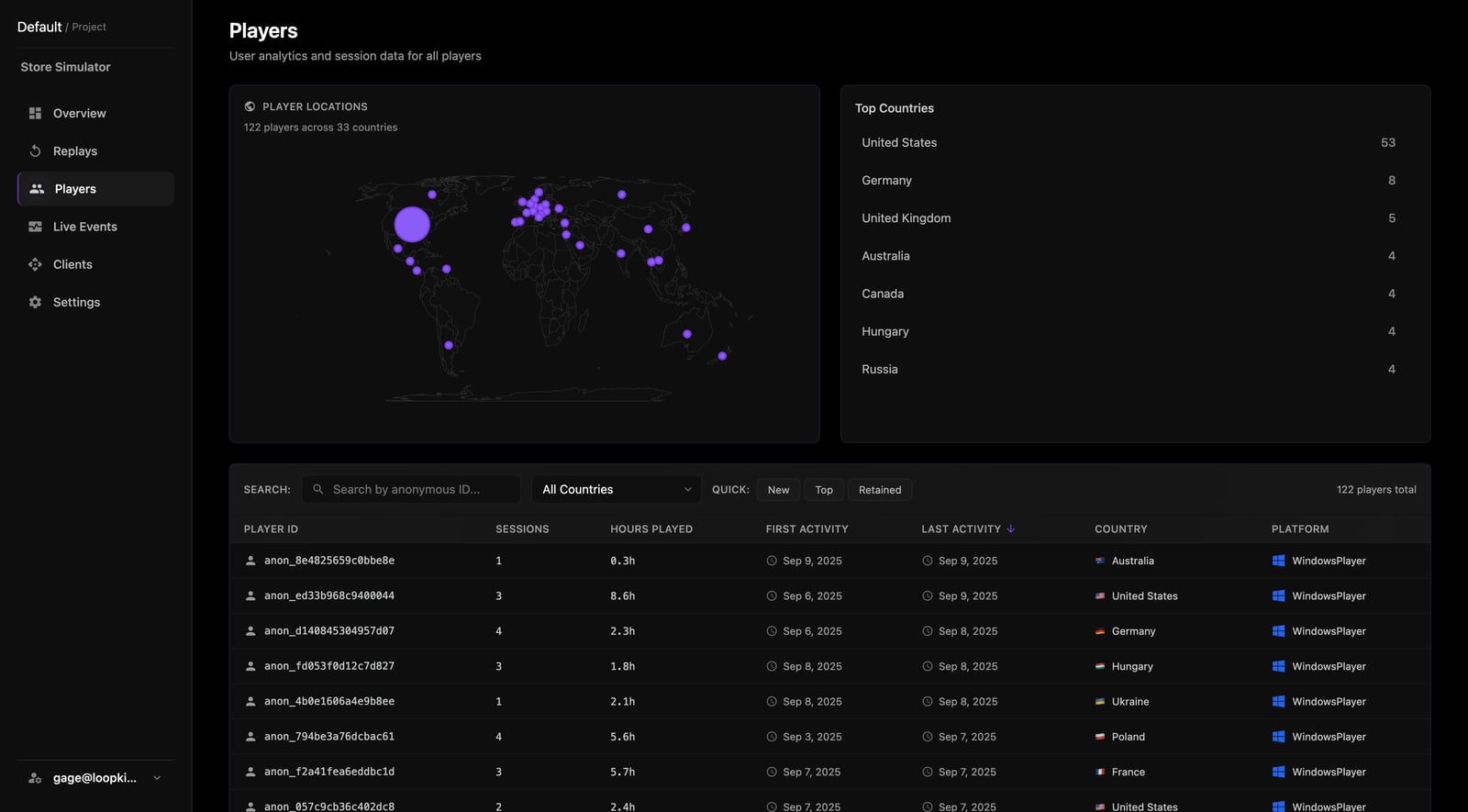
Every session showed up in a list next to the replay: how long it ran, the
player’s country, which platform or engine build it came from, and an
at-a-glance engagement read like “Very High” so you could tell which
sessions were worth watching before opening one. Open a session and the
replay plays back the actual game, HUD and all, with the raw event stream
(player_action, timestamped to the millisecond) scrolling alongside it in
real time. No reconstructing what happened from a spreadsheet: you watch it
happen.
The stack
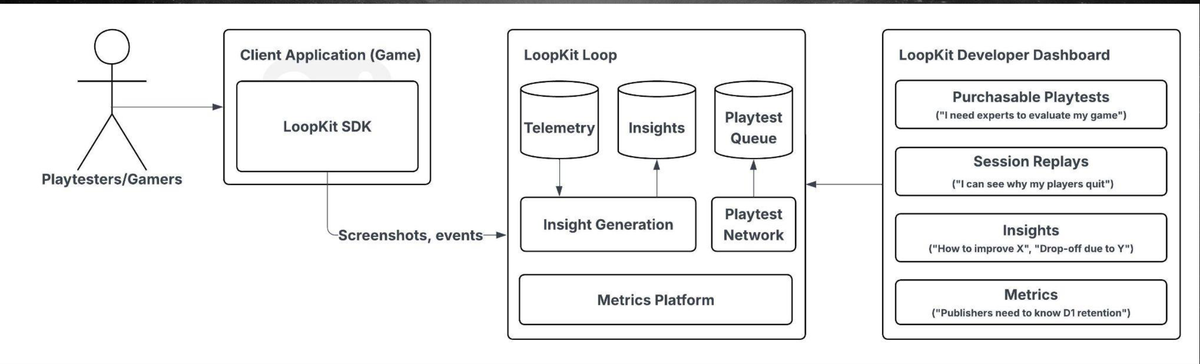
- Event ingest: over Kinesis, processed as events arrive rather than in batches.
- MotherDuck: the analytical warehouse.
- Agents: doing the interpretation, context assembly, and alerting.
- SDKs: for Unity, JavaScript, and React. The Unity SDK shipped privacy-first, opt-in only, and once a player consented it picked up FPS, memory, network, and crash telemetry automatically, no extra instrumentation required.
- Serverless on AWS: idle cost was near zero.
How it would have made money
- Telemetry ingestion and storage: usage-based, growing with a studio as their game scales.
- A gamified playtesting network: studios pay to get their games playtested, with a “play to playtest” system driving participation.
- Agentic development tools: infrastructure that leverages the gameplay data LoopKit already had to fuel AI-driven development.
- Enterprise features: SSO, team seats, and the rest of the usual list.
What killed it
It died on market fit. Indie devs mostly treat their games as art, not as a min/max data problem, and pitching AI-driven telemetry to that audience landed badly on both counts. I think we were early rather than wrong. The same shift that’s lowering the barrier to making games is producing developers who need this, so it may come back.